
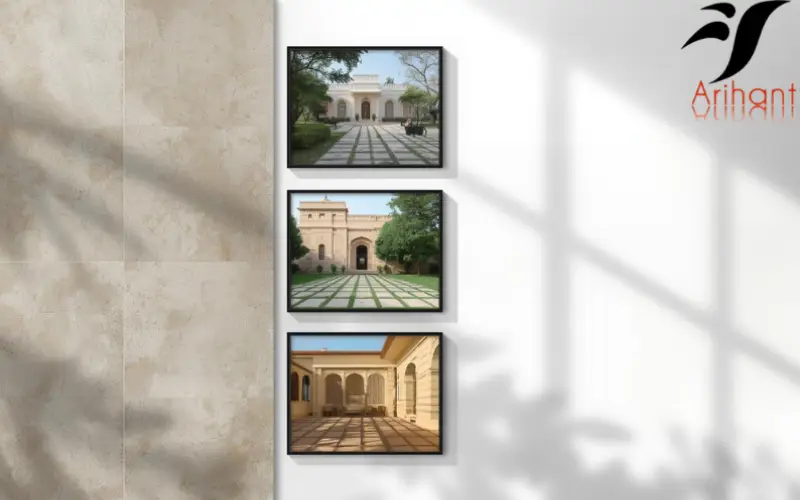
When it comes to the global stone industry, Indian Sandstone has always been one of the best options due to its natural beauty and extreme durability. The rich quarries of Rajasthan and other regions provide natural stones that are exported internationally to produce products as diverse as flooring/cladding and landscape/architectural stone.
This article will give you an overview of the best (and most popular) varieties of sandstone. Some of the more popular varieties, such as Kandla Grey, Raj Green, Mint, and Jaisalmer Yellow, will be discussed in further detail, including their defining characteristics and uses.
What exactly is Sandstone? Why Sandstone? Sandstone is a type of sedimentary rock that is composed primarily of sand grains that have been compacted together over time and bonded by natural minerals (silica or calcium carbonate). Because of its porous nature, sandstone has natural colour and pattern variations, making each piece unique. However, the quality of sandstone is superior to that of many other sandstone varieties due to its high-quality standards, low price point, and eco-friendly extraction methods used for mining this natural stone. The large deposits located in Rajasthan produce Sandstone that is weather resistant and easy to work with, making it an ideal stone for both indoor and outdoor projects.
Sandstone is a softer, more organic option than other types of natural stone, including marble and granite, which makes sandstone better suited for applications where there is a greater potential for cracking and where sandstones can be finished in many different ways, including honed, polished, and also tumbled finishes. With the rising demand for eco-friendly building materials, Sandstone has become a frequently utilized material by builders who consider sustainability important.
Variety of Indian Sandstones: An Overview
India offers a multitude of varieties of Sandstones with varying colours, textures and strengths. Here’s an overview of some of the most popular varieties.
Kandla Grey Sandstone is among the most sought-after varieties of sandstone; it is known for its subtle grey tones and occasional white and black flecking. This particular variety is quarried from the Kandla region of Gujarat. Kandla Grey is a fine-grained sandstone, making it the perfect choice for modern and minimalist styles. The neutral colour palette allows Kandla Grey to blend beautifully with today’s contemporary designs, and its durability makes it suitable for use in high-traffic locations.
Kandla Grey Sandstone
Kandla Grey Sandstone is a popular choice for flooring in residential spaces, commercial buildings, and office facilities, as well as for cladding, paving stone applications, and paths in gardens. Architects appreciate using Kandla Grey Sandstone for exterior facades due to its weather-resistance properties. For landscaping projects, the clean, elegant look of Kandla Grey Sandstone adds a modern touch to patios and driveways.
Raj Green Sandstone
Raj Green Sandstone is a vibrant green sandstone with earthy undertones, often having beautiful veins or fossils. Raj Green Sandstone is sourced from the state of Rajasthan, India and offers great strength and workability. Its medium grain structure allows Raj Green Sandstone to serve as a versatile building material for many different types of construction projects.
Raj Green Sandstone is well-suited for both indoors and outdoors and is commonly used in flooring, countertop, and fireplace surround applications; Its beautiful rich color makes it an attractive choice for water features in gardens, such as fountains and benches. Use Raj Green Sandstone for cladding and roofing tiles to add natural beauty to your eco-chic building designs.
Mint Sandstone
Mint Sandstone or Mint Fossil, or simply Mint, is another popular sandstone variety sourced from Rajasthan. Mint Sandstone is characterized by its very soft mint green colors interspersed with fossil impressions. Mint Sandstone has a smooth surface with a honed finish, representing serenity and gracefulness.
Mint Sandstone Applications: Mint is popular for areas that create a sense of calm and tranquility. That is why it is commonly found in bathrooms as wall tiles, in kitchen backsplashes and as decorative accents. Outdoors, Mint is used for pool surrounds, sidewalks, and for garden sculptures. The tranquil colour of Mint is why many energy-based communities, such as wellness centres and Spas, use this stone for their business.
Variations of Mint Sandstone.
Another type of sandstone is Jaisalmer Yellow. Jaisalmer Yellow is extracted from the Jaisalmer district of India, and has an attractive golden-yellow colour and a coarse texture with occasional brown streaking throughout the stone. It characterizes the warmth of the desert and has become one of India’s most popular Sandstones.
Applications of Jaisalmer Yellow Sandstone: Jaisalmer Yellow is traditionally used in the construction of Heritage & Traditional architecture, and therefore is used for flooring as well as the covering of walls and the construction of monuments. Nowadays, due to its warm sunny appearance, Jaisalmer Yellow is becoming increasingly popular for use in patios, driveways, and outdoor kitchens. Because Jaisalmer Yellow is porous, it has some limited application in water features… it must be sealed to be used effectively in areas that may be exposed to moisture.
Other Noteworthy Types of Indian Sandstone
While there are a number of different types of sandstone available for different applications, these are some examples of Sandstone.
- Dholpur Beige Stone is light beige with uniform grains, suitable for modern style. It is used as flooring, on stairs, and in the lobbies of offices.
- Teakwood Sandstone is reddish brown like teak, ideal for a rustic look. Its main functions include paving pathways or walkways in gardens, making furniture, and as decorative coverings on walls.
- Modak Sandstone is light creamish white with small patterned flecks and can create elegant spaces. It can be found used in countertops, dishes, and sculptures.
- Rainbow Sandstone has various multi-colored bands and works well when presenting art pieces or for outdoor décor.
- Agra Red Stone is deep red and rich with history. It traditionally had a place in the construction of monuments, and it is now often used for premium flooring.
Some additional features offered by Indian sandstone include durability, compressive strength under pressure, natural non-slip surfaces of the stones when wet, and environmentally friendly quarry operations compared to mining for harder stone types, with many suppliers practicing responsible methods. The advantages of sandstone go beyond its beauty; the reason for this is its durability and strength, allowing for commercial use.
Maintenance of Your Stone – The maintenance of your stone requires not only regular cleaning with a gentle soap and water, but also sealing every couple of years, in order to maintain its pristine appearance. Unlike synthetic materials, sandstone develops a patina as it ages and as a result adds character and charm to an environment.
Uses of Sandstone throughout the Industries
Indian sandstone can be used throughout various industries, such as:
- Residential: sandstone can be used in creating a warm, inviting home by using sandstone for Kitchen islands, Backyard decks, and other areas.
- Commercial: sandstone can be used to enhance professional lobbies and exteriors of hotels and office buildings.
- Landscaping: Garden borders, pavers, and retaining walls benefit from the beauty of sandstone.
- Architecture: While historic restorations use sandstone, modern buildings can still take advantage of its timeless beauty.
Selecting a Variety of Indian Sandstone
When choosing a particular variety of Indian sandstone, keep in mind a number of factors including the climate, traffic and finish. For example, polished sandstone is better for interior use, while honed/tumbled sandstone is more suitable for exterior application.
How to Select and Source Quality Indian Sandstone
In order to ensure quality, always purchase from a reputable dealer that has a certification of origin and a certification of sustainable practices. Visit the quarry or showroom and evaluate the samples to ensure the stone’s pulp consistency with respect to color and texture. The introduction of an online marketplace has simplified the export of sandstone worldwide; however, always verify the authenticity of the stone you purchase to avoid receiving inferior quality products.
Stone prices differ according to type, finish, and quality. For example, Kandla Grey stone can be purchased for between $20 and $40 per sq. ft. whereas rarer stone types, such as Mint, may command higher prices than Kandla Grey. For the best value of your investment, it is important to invest in a quality stone that will stand the test of time.
Indian sandstone varieties such as Kandla Grey, Raj Green, Mint, and Jaisalmer Yellow showcase the country’s abundance of natural resources. Each of these stones provide not only their distinctive styles but how they construct and perform as building materials. Whether you are redecorating an existing home or starting a new building project, utilizing an sandstone is your sustainable, fashionable option. Take the time to investigate all that sandstone has to offer, consult your local stone supplier, and take the leap to employ sandstone in your future building designs.