
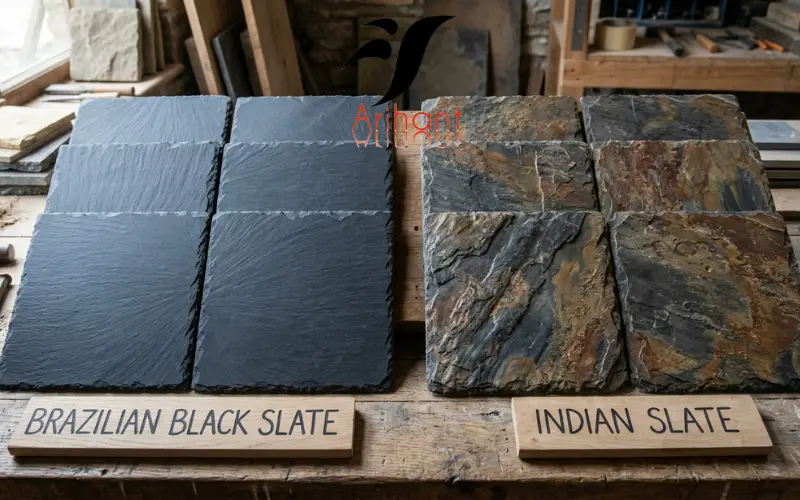
When it comes to selecting the perfect slate for roofing, flooring, cladding, or even artistic installations, two powerhouse options dominate the global market: Brazilian black slate and Indian slate. Both are metamorphic rocks prized for their durability, natural beauty, and versatility, but they hail from distinct geological origins that shape their properties, performance, and appeal. Brazilian black slate, quarried from the ancient Precambrian formations in the southeastern regions of Brazil, boasts a deep, uniform black hue with subtle silvery flecks, evoking a sleek, modern elegance.
Indian slate, primarily extracted from the Aravalli mountain ranges in Rajasthan, offers a broader spectrum from jet black to greenish-black tones, often with more pronounced quartz veins and a rustic texture. The debate over which is superior hinges on factors like aesthetics, durability, workability, cost, and environmental impact. This in-depth comparison unpacks these elements to help you decide based on your project’s needs, without a one-size-fits-all winner.
Aesthetics form the first battleground. Brazilian black slate captivates with its velvety, almost matte black surface that reflects minimal light, creating a sophisticated, understated luxury ideal for contemporary architecture. Its fine grain structure typically under 0.1mm ensures color consistency across large slabs, minimizing variations that could disrupt visual harmony in expansive installations like facades or pool surrounds. When split naturally, it reveals a smooth cleavage plane with delicate pyritic sparkles, adding depth without overwhelming the design.
In contrast, Indian slate brings a bolder, more characterful personality. Its slightly coarser grain (0.2-0.5mm) introduces natural veining and subtle color shifts, from true black to charcoal with hints of green or rust, lending a timeless, heritage feel perfect for traditional or rustic settings like heritage restorations or countryside homes. While Brazilian slate’s uniformity suits minimalist modern builds, Indian slate’s organic variability shines in spaces craving personality, though it demands careful selection to avoid mismatched batches.
Durability is paramount for slate, as these stones face harsh weather, foot traffic, and thermal cycling over decades. Brazilian black slate excels here with superior compressive strength, often exceeding 150 MPa, and low water absorption rates below 0.2%, making it highly resistant to freeze-thaw damage in cold climates.
Its dense matrix, formed under intense metamorphic pressure, shrugs off moss growth and staining, retaining its jet-black luster for 50+ years with minimal sealing. Tests show it withstands abrasion better than many competitors, with a PEI rating of 4-5 for flooring, ideal for high-traffic areas. Indian slate holds its own impressively, boasting similar strength (120-140 MPa) and even lower porosity in premium grades (0.1-0.3%), but its performance varies by quarry. Multani or black Indian varieties resist weathering well, yet some lots develop efflorescence or subtle patina over time, which some view as charming aging rather than degradation. In tropical or humid environments, Indian slate’s natural oils can enhance water repellency, but it may require more frequent maintenance in polluted urban settings to prevent quartz vein leaching.
Workability and installation ease further differentiate the two. Brazilian black slate’s consistent thickness (typically 0.5-1 inch for tiles) and perfect rectangular splits make it a dream for fabricators. It cuts cleanly with diamond saws, drills without chipping, and bonds seamlessly with thin-set mortars, reducing labor costs by up to 20% on large projects.
Its thermal stability low expansion coefficient prevents buckling in heated floors or sun-baked roofs. Indian slate, while versatile, often arrives with more natural clefting and thickness variations (up to 1/4 inch), necessitating sorting and calibration, which adds time and expense. However, its flexibility allows for curved applications like hearths or countertops, and it takes a high polish beautifully for contrasting finishes. For roofing, Brazilian slate’s lighter weight (around 1,200 lbs per 100 sq ft for 1/4-inch) eases structural loads, while Indian slate’s robustness suits steeper pitches despite slightly higher density.
Cost-effectiveness tilts the scales variably by region and scale. Brazilian black slate commands a premium, often 20-40% higher per square foot due to selective quarrying, stringent export standards, and longer shipping routes from South America. Bulk buyers might pay $15-25 for roofing tiles, appreciating its low lifecycle costs from reduced replacements. Indian slate, benefiting from proximity to major markets and abundant supply, starts at $8-15 per square foot, making it a budget-friendly choice for expansive commercial jobs or DIY renovations.
Import duties and freight from Asia can narrow the gap, but India’s efficient supply chain ensures faster delivery. Over time, Brazilian slate’s longevity offsets its upfront expense, potentially saving 15-30% in maintenance, whereas Indian slate’s affordability shines in cost-sensitive projects where aesthetic patina is acceptable.
Sustainability rounds out the comparison, reflecting modern priorities. Brazilian quarries operate under rigorous environmental regulations, employing advanced dust suppression, water recycling, and land reclamation yielding a smaller carbon footprint per ton despite oceanic transport. Its slower extraction rate preserves resources, and the stone’s density means less material for the same coverage.
Indian slate production, fueled by a massive industry, faces scrutiny for water-intensive splitting and occasional unregulated mining, though progressive operations now use solar-powered machinery and zero-waste initiatives. India’s slate generates more dust and slurry, but local sourcing slashes transport emissions for Asian and European buyers. Both score well on renewability as natural stones, but Brazilian edges out in ethical labor standards and biodiversity protection.
In practical applications, the choice crystallizes. For upscale urban residences or luxury hotels demanding flawless black uniformity and effortless maintenance, Brazilian black slate reigns supreme think seamless kitchen islands or sleek exterior walls that age gracefully without intervention.
Its subtlety complements glass and steel, enhancing resale value in high-end markets. Conversely, Indian slate thrives in organic, lived-in environments like farmhouses, patios, or public monuments, where its textured narrative adds soul. Roofing pros favor Brazilian for its nail-holding strength and wind resistance (up to 110 mph), while Indian slate dominates budget-conscious pitched roofs in rainy climates due to superior slip resistance when wet.
Ultimately, neither is universally “better” it depends on your priorities. If precision, longevity, and a polished modern vibe top your list, Brazilian black slate’s refined qualities make it the frontrunner, justifying the investment for premium outcomes.
For value-driven projects embracing natural imperfections and bold character, Indian slate delivers unbeatable bang for the buck with comparable endurance. Evaluate samples under your lighting conditions, consult local installers for regional climate fit, and crunch total ownership costs. By weighing these attributes against your vision, you’ll select the slate that not only performs but elevates your space for generations.