
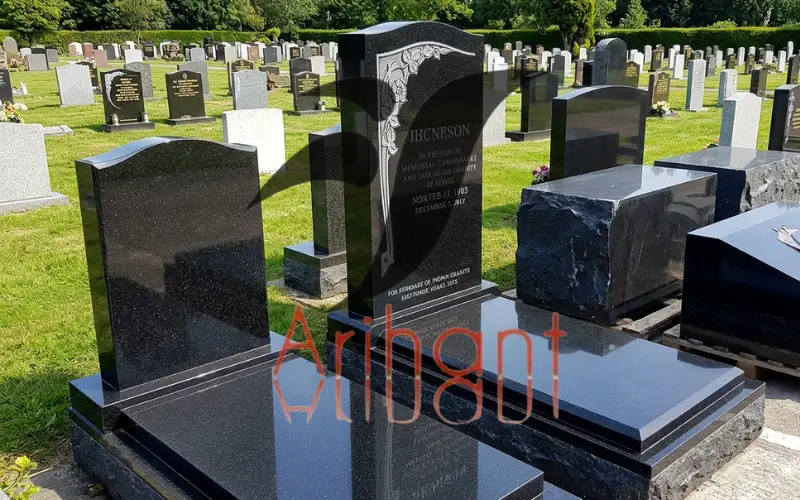
When we think of grand monuments and touching memorials, images of India’s India Gate or local war memorials come to mind. What makes them stand tall through decades? Often, it’s Indian black granite. This deep, shiny stone from our quarries is a top pick for builders and designers. Tough as nails yet beautiful, it’s transforming how we honor history, heroes, and loved ones. Let’s explore in simple words why Indian black granite rules for monuments and memorials.
What Makes Indian Black Granite Special?
Black granite isn’t your everyday rock it’s premium stone quarried mainly from South India, like Telangana, Andhra Pradesh, and Karnataka. Think places like Chimakurthy or Ongole, buzzing with massive slabs. This stone is igneous, born from cooled lava deep underground, packed with minerals like quartz and feldspar.
Its color? Jet black with tiny sparkles, like a starry night. Polish it, and it gleams like glass. Unlike softer marbles, it laughs off rain, sun, and pollution. For monuments big public structures like statues or obelisks and memorials personal spots like family tombs it’s ideal. Why? Durability first. A slab can last 100+ years without cracking.
India exports tons yearly, but locals love it for its “made in India” pride and low cost compared to imports from Brazil or South Africa.
Unmatched Durability for Timeless Tributes
Monuments face brutal weather. Delhi’s heat hits 45°C; Mumbai monsoons pour 2 meters of rain. Indian black granite shrugs it off. Its low water absorption (under 0.5%) stops cracks from freeze-thaw in hill stations like Shimla memorials.
Take the Rashtriya Saina Smarak in Delhi black granite walls endure dust storms. Or Rajasthan’s war memorials; the stone resists salty winds. Memorials in graveyards? No moss or fading. Unlike limestone that crumbles, black granite stays sharp.
Engineers test it: Compressive strength over 200 MPa stronger than concrete. Earthquakes? It flexes without breaking, as seen in Gujarat quake memorials.
Beauty That Commands Respect
Beauty matters in memorials they evoke emotion. Indian black granite’s deep black contrasts gold lettering perfectly. Engrave “In Loving Memory” or names it pops. Add LED lights at night? Stunning glow.
Varieties like Black Galaxy (with gold flecks) or Absolute Black (pure shine) fit any design. Modern? Sleek, minimalist slabs for urban parks. Traditional? Carved pillars for temples-turned-memorials.
At Raj Ghat, Gandhi’s black granite platform draws millions. Simple yet powerful. For personal memorials, families pick it for urn gardens elegant, non-fussy.
Cost-Effective Choice for Big Projects
Budget crunch? Indian black granite shines here. Quarried locally, transport costs pennies. A 3cm slab for a 10x5m monument wall? ₹200-400 per sq ft half Italian black’s price.
No import duties or delays. Suppliers in Hyderabad or Bangalore deliver nationwide in weeks. Bulk buys for city projects slash prices further. Government tenders favor it cheaper upkeep too. No frequent repairs like painted concrete.
Easy to Work With for Stunning Designs
Artists love it. Hard but carveable with diamond tools. Intricate motifs like lotus for memorials or soldier silhouettes for monuments come alive. CNC machines make precision easy.
Polish levels: Honed for matte memorials (less slippery), mirror for flashy gateways. Mix with brass plaques or glass inlays. Install? Lightweight per strength, quick bolting.
Case: Amarnath Yatra memorials use portable black granite panels easy to shift.
Weatherproof and Low Maintenance
India’s diverse climates test stones. Coastal memorials battle salt spray; Himalayan ones, snow. Black granite’s dense structure blocks stains. Acid rain? No etch marks.
Clean it yearly with water and mild soap done. No sealing needed like porous granites. UV rays don’t fade it; color stays true.
In polluted cities like Kanpur, memorials gleam while nearby stones yellow.
Cultural and Historical Significance
India’s granite legacy dates to ancient times Ashoka pillars had granite bases. Today, it’s symbolic: Black for mourning, eternity. War memorials use it for fallen soldiers; leaders’ samadhis too.
Telangana’s black granite fueled India’s memorial boom post-independence. It’s “desi superstone” supports local jobs in 1,000+ quarries.
Famous Examples Across India
- India Gate, Delhi: Black granite base, timeless.
- Veer Nariman Point Memorial, Mumbai: Withstands sea air.
- Kargil War Memorial, Dras: Freezes at -40°C, no cracks.
- Bhakra Nangal Dam Monument: Flood-resistant.
State memorials like Tamil Nadu’s Anna Memorial showcase regional pride.
Eco-Friendly and Sustainable Option
Green building? Black granite scores. Quarrying reuses waste for roads. Low energy to process no chemicals. Recyclable too.
Compared to cement (high CO2), it’s kinder. Certifications like GreenPro make it project-ready.
Versatility for Modern and Traditional Designs
Not just slabs cut into benches, pathways, or abstract sculptures. For memorials, vertical steles or horizontal platforms. Pair with solar lights for night vigils.
Urban parks use it for interactive walls QR codes link to stories. Rural? Simple plinths.
Custom sizes: From 60cm headstones to 20m obelisks.
Challenges and Smart Solutions
Heavy? Use cranes standard now. Dust in quarries? Modern filters help. Cost fluctuations? Lock prices with suppliers.
Pick certified dealers avoid color-fading rejects.
Why Choose Indian Black Granite Today?
For monuments saluting freedom fighters or memorials for lost ones, nothing beats it. Durable, beautiful, affordable it’s India’s gift to eternity.
Builders say: “One project with black granite, and clients demand it forever.” Families add: “Our memorial looks new after 20 years.”
Explore quarries or showrooms in South India. Your next tribute deserves the best Indian black granite.
Meta data
Indian Black Granite for Monuments: Why It’s Preferred
Discover why Indian Black Granite is preferred for monuments and memorials. Learn about durability, finish, engraving quality & long-lasting beauty.